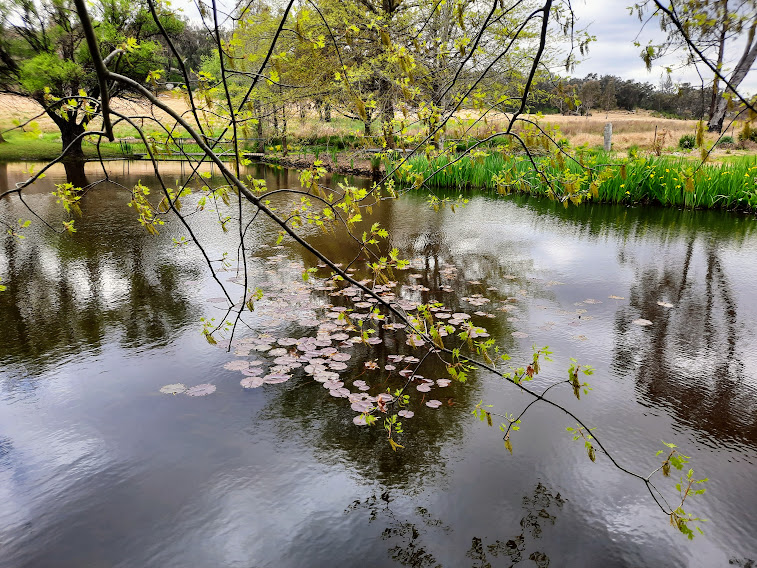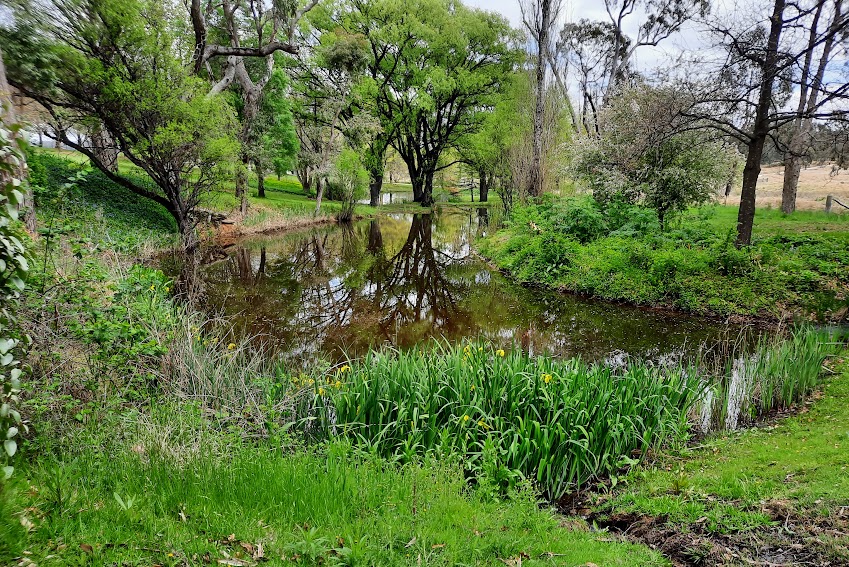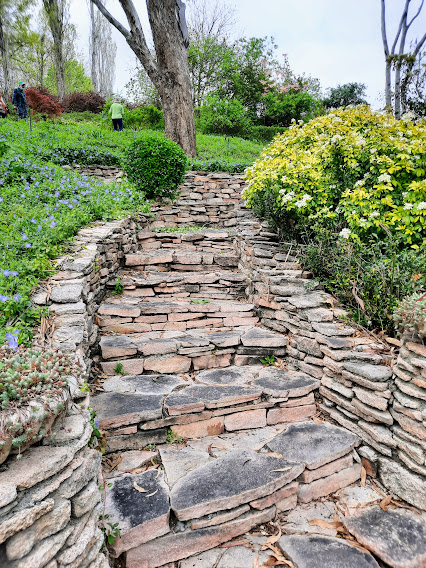
Mayfield Gardens: A fabulous day out

Who doesn’t love a beautiful garden? But when people talk about spectacular, must-see gardens, they’ll tell you all about the Humble Administrator’s Garden in Suzhou or about how many waterlilies they counted in Monet’s garden near Paris or the incredible flower display in the Butchart Gardens in Victoria, British Columbia, or some other equally spectacular garden located somewhere overseas, far away from Australia.

But Australia has some spectacular gardens too. Unfortunately, most are not as well known as those blooming in far distant lands. For example, last year, friends told us about Tenterfield’s Glenrock Gardens which had just re-opened to the public. We certainly had never heard of it but thought it would make for a great little tripette. We thoroughly enjoyed ourselves and thought the designer’s vision to meld a cool climate European garden tradition with iconic Australian flora was inspired and well suited to the New England environment.

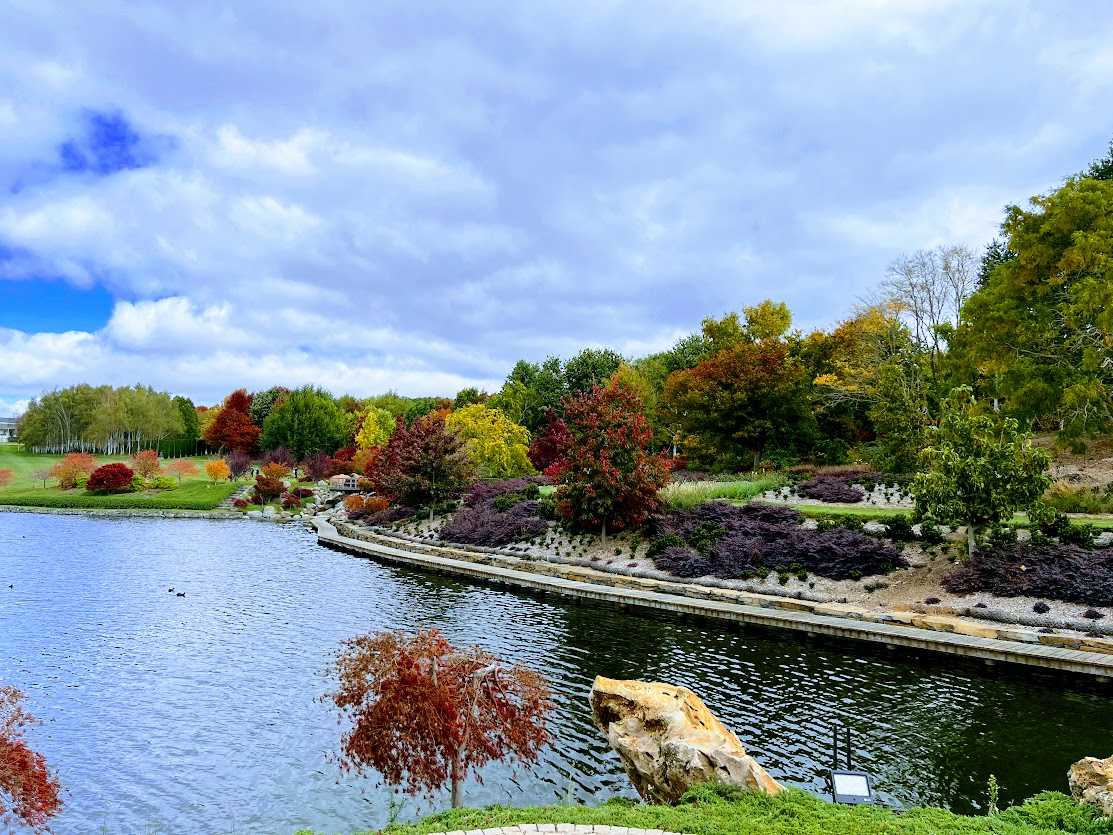
Following that trip, my sister Jenny told me about Mayfield Gardens, a cool climate garden that had been established by the Hawkins family near Oberon in the Central West of New South Wales. As we heading south just after Easter, we thought we would visit the garden during their Autumn festival and soak up some wonderful autumn colour, something that we here in sub tropical Byron Bay lack.
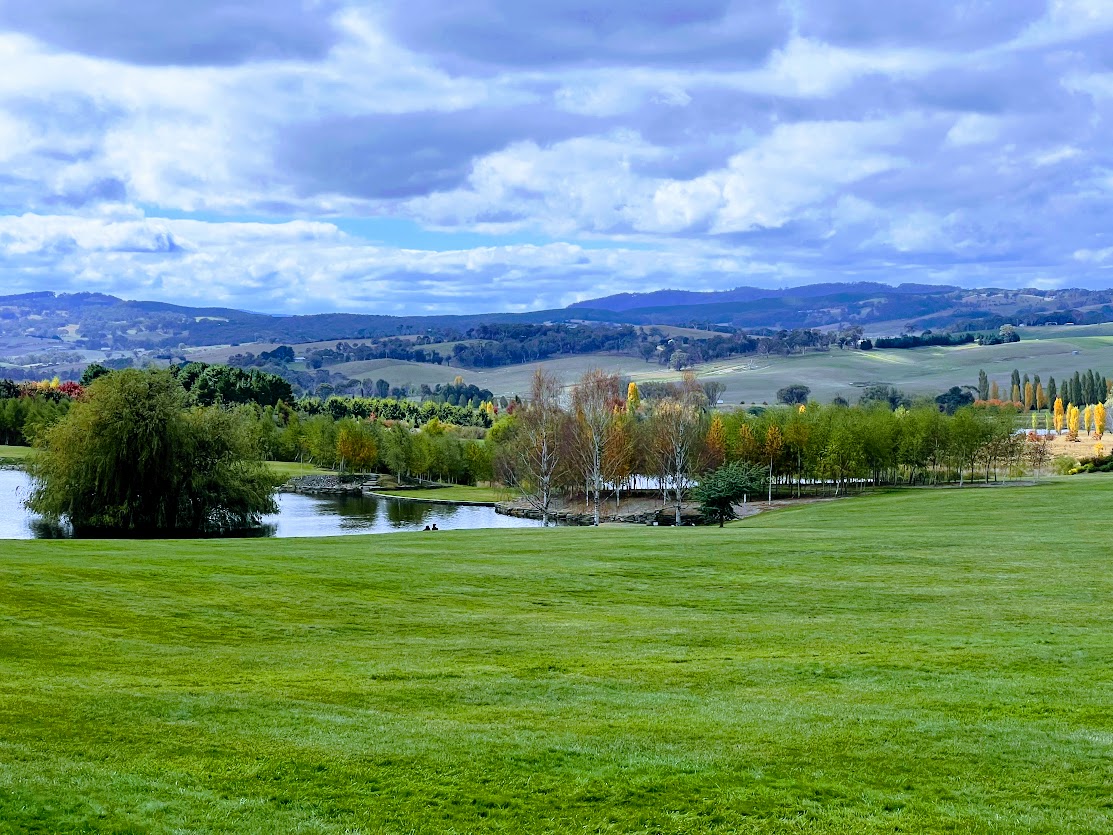
Although the 15 hectare Mayfield Garden is open 363 days a year, it is only during the four seasonal festivals that the Hawkins 50 hectare private garden is open to the public as well.

It was a cool, misty morning when we left the Blue Mountains. Not sure which road to take, we used Google Maps to guide us and were not disappointed. Google took us to Lithgow where we turned onto Magpie Hollows Road. What a great name for an Australian country road! And it was so pretty as we meandered up hill and around dale through a lovely autumn landscape. Even through we were not on a main road, we didn’t encounter black spots and were on time for our rendezvous with Jenny.

Admission to the gardens is not free and prices can vary so check out their website for updates. Although you are encouraged to purchase tickets online, we bought ours at the gardens. There wasn’t a big queue even though there were a lot of visitors, judging by the numbers of cars in the carpark. Over cappuccinos in the delightful cafe, we perused maps of the garden. As it was still part of the Autumn Festival, we could explore two gardens. The watergarden that is Mayfield Garden and the much bigger Hawkins family garden which adjoins Mayfield Garden. The two gardens combined cover a very large area and we didn’t think we’d be able to explore all of it in one day, so a little planning was in order. A visit to the Obelisk was first on our agenda.

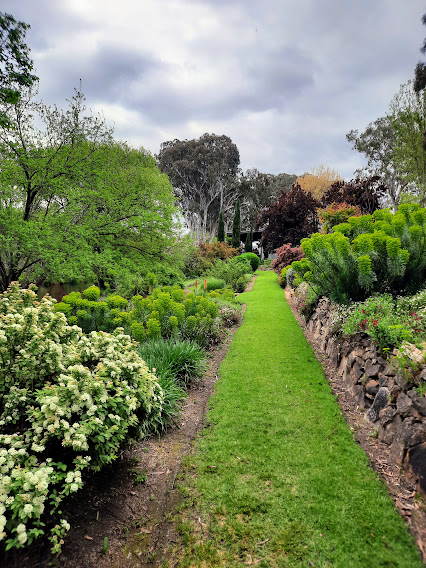
A curving path framed by shrubs bursting with shades of orange and red led us forward to the water garden. As we strolled along, we wondered what might be behind the towering green hedge on our right?
The path led us through a sandstone tunnel
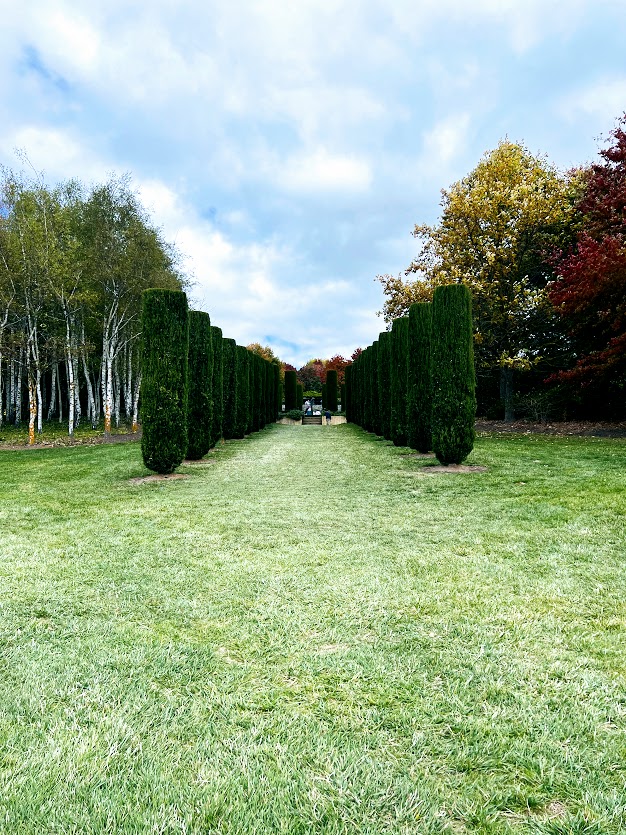
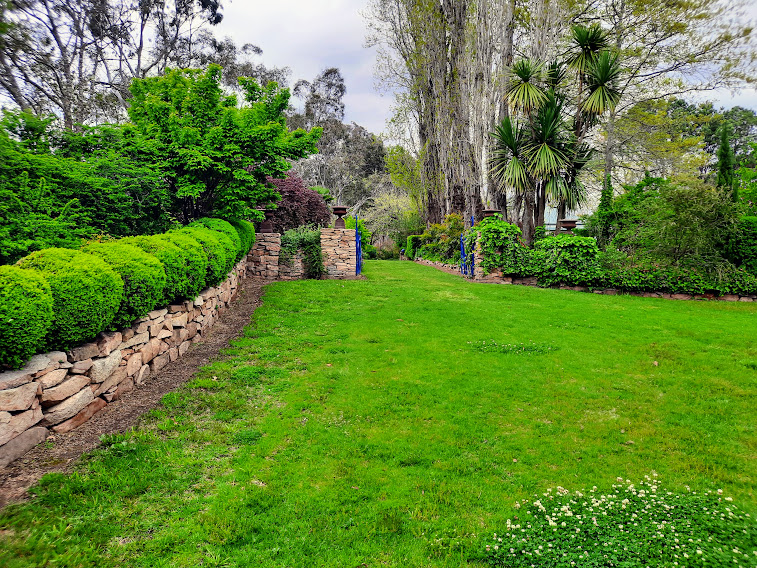
and there it was, the Obelisk, encircled by water and the perfect semi-circular hedge. The work involved in keeping that hedge perfectly clipped is mind boggling! Even in cloudy conditions it was really lovely, the symmetry soothing to the soul.
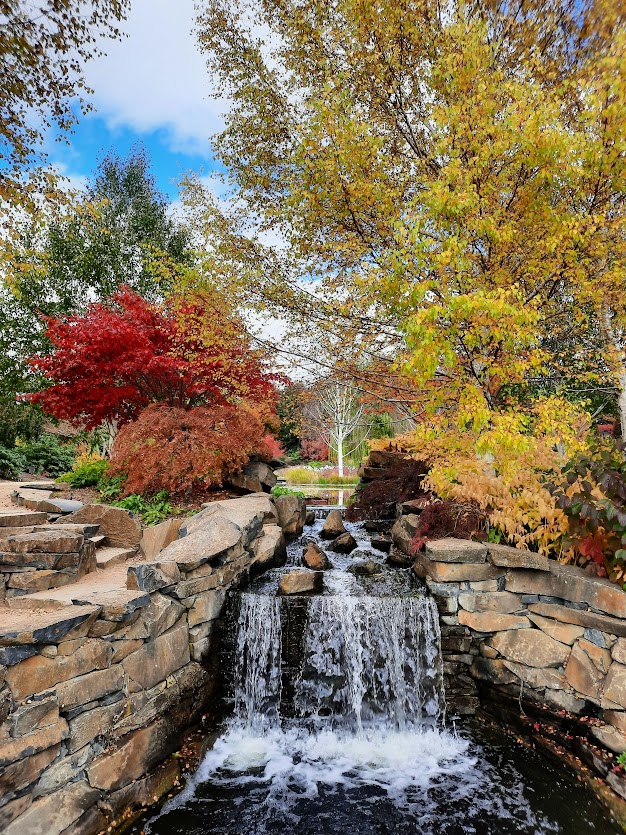
We had entered the realm of the water garden. As we gazed and clicked away at the Obelisk, the sound of cascading water was all around us. We turned and there was a beautiful cascade. I couldn’t help but admire how perfectly your eye is led up through the cascade to the garden and ponds beyond.
But the garden doesn’t want to reveal its secrets all at once. The path leads you out to the fringes of the garden, then back to the ponds again.
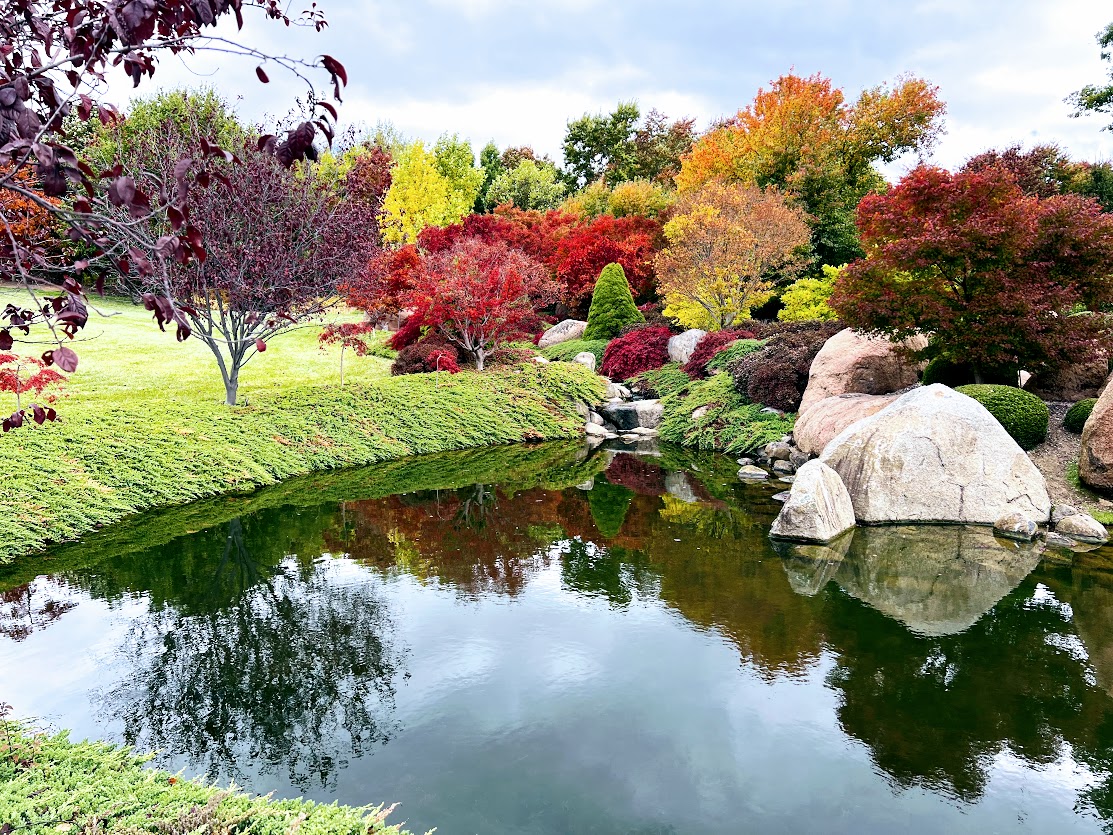
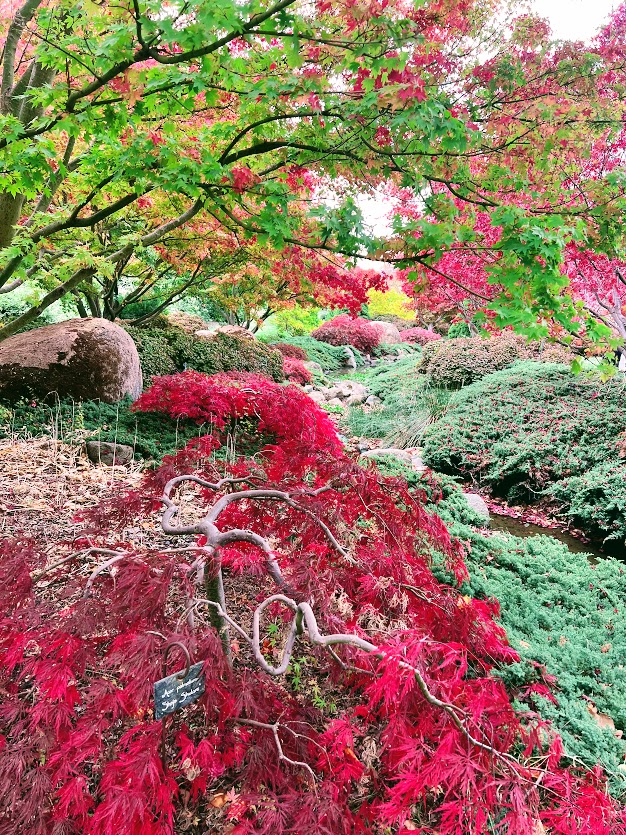
Where the explosion of colour is just wonderful. The balance of reds, yellows and oranges is enhanced by the evergreen foliage which surrounds them.
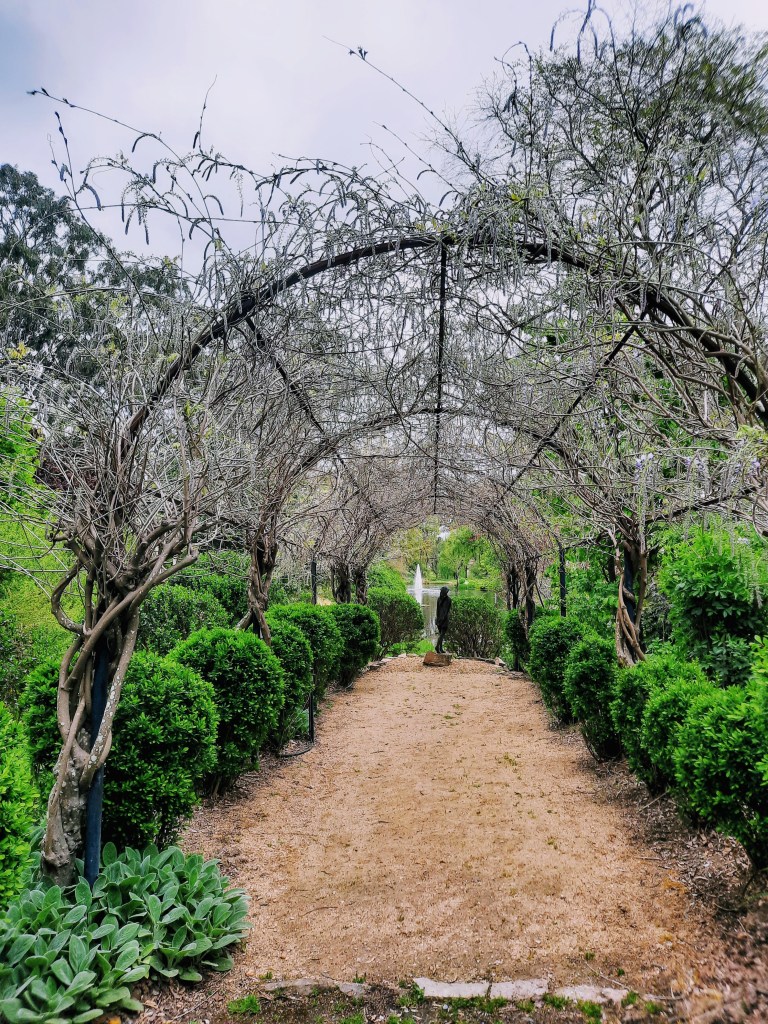
The white, weeping branches of trees and shrubs that had already dropped their leaves were lovely as well.
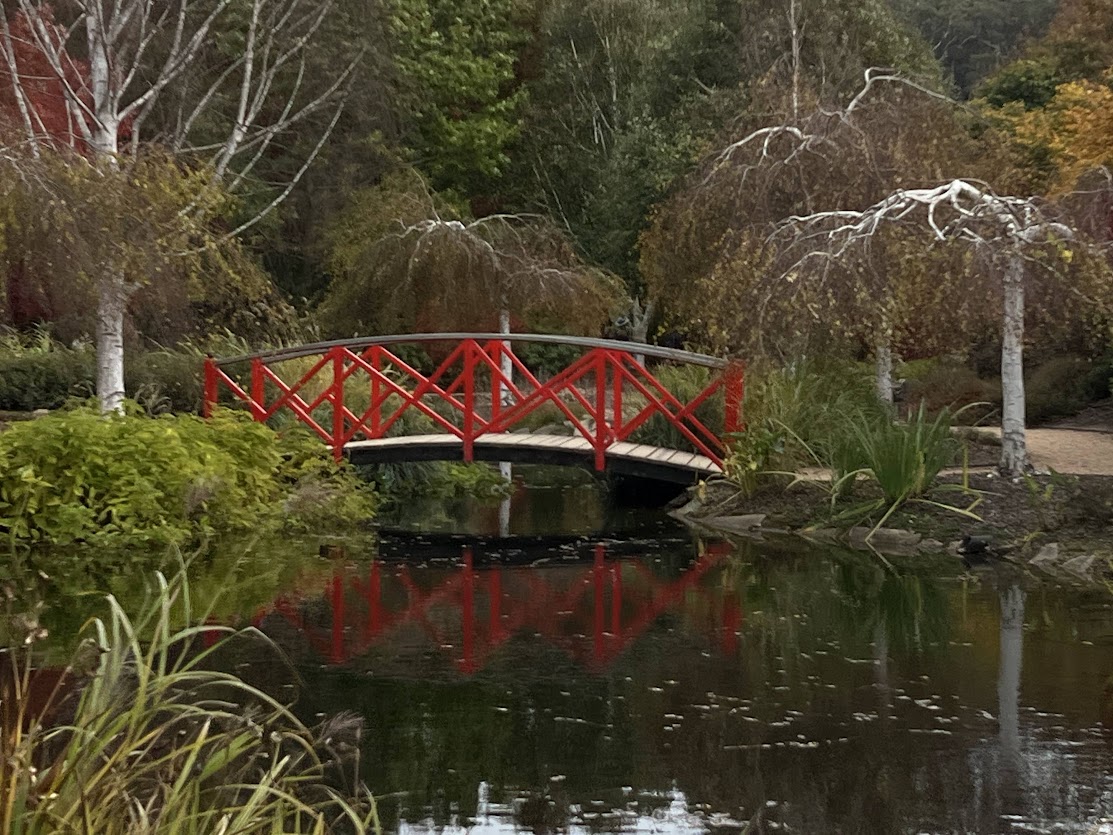
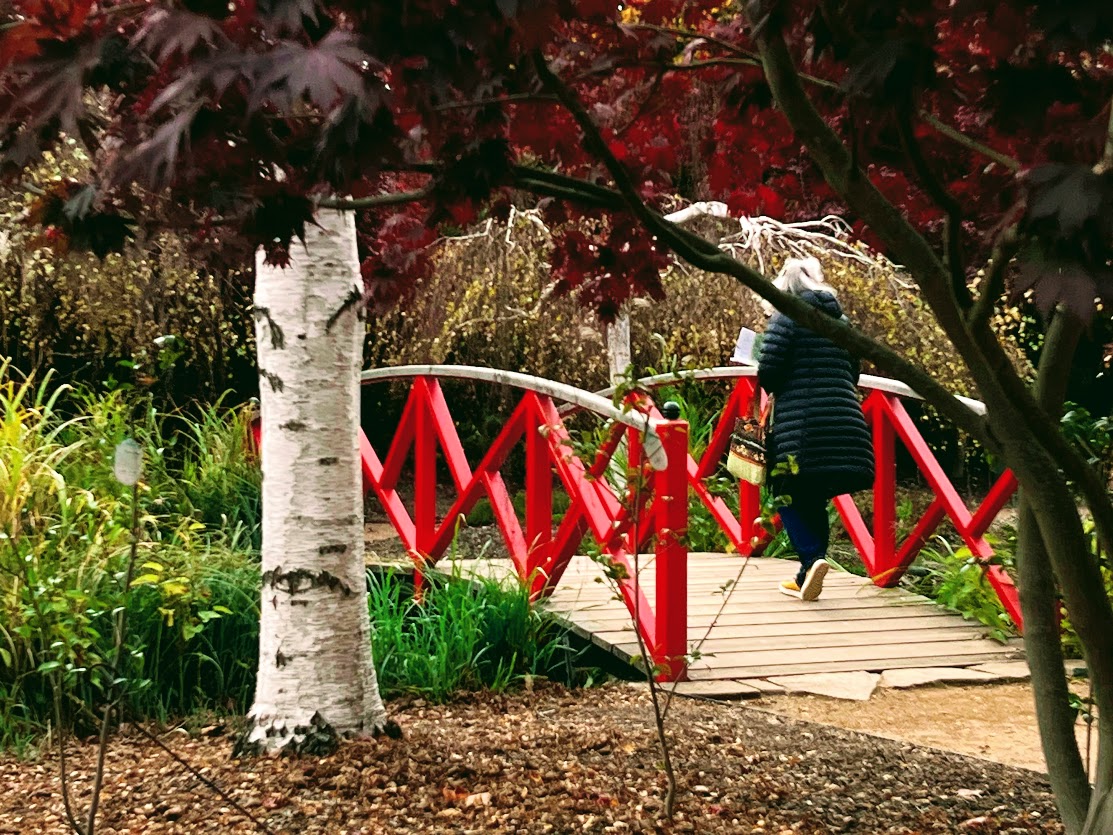
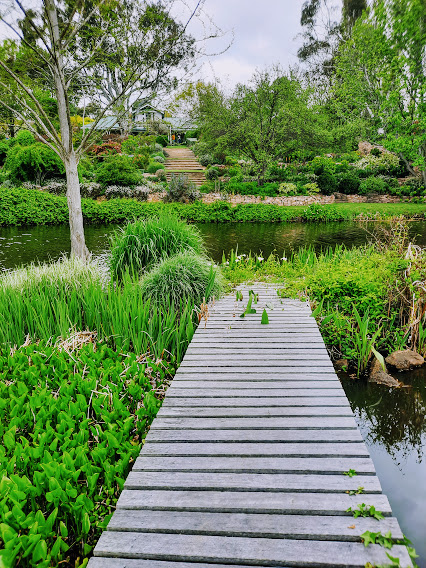
And then there’s the beautiful Chinese bridge. At least I thought it looked to be Chinese or Japanese inspired. Obviously, there are two sides to a pond, so two sides of the garden to explore.
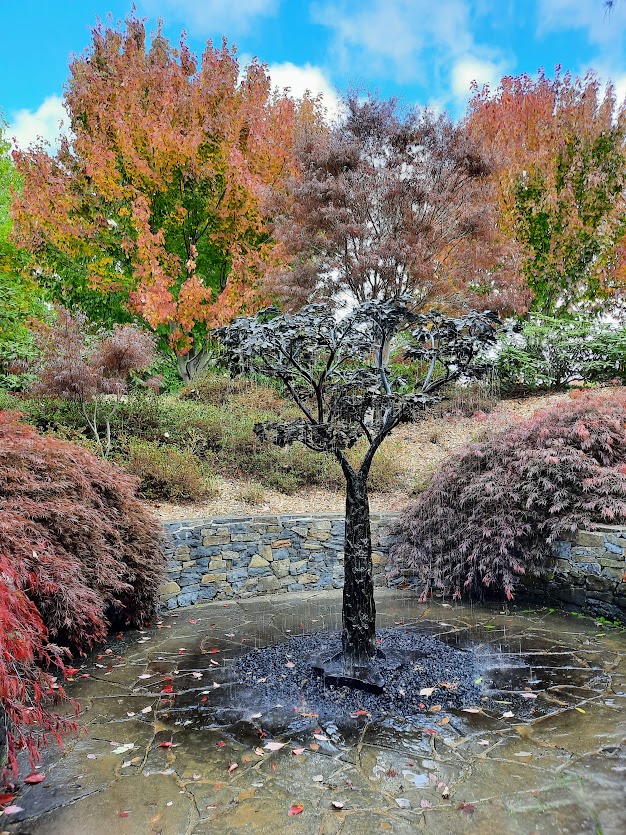
This isn’t a garden which has a statue or sculpture around every bend. But there are several very special installations in the garden. This copper tree is one of them. I suspect it will look even more spectacular in Spring.
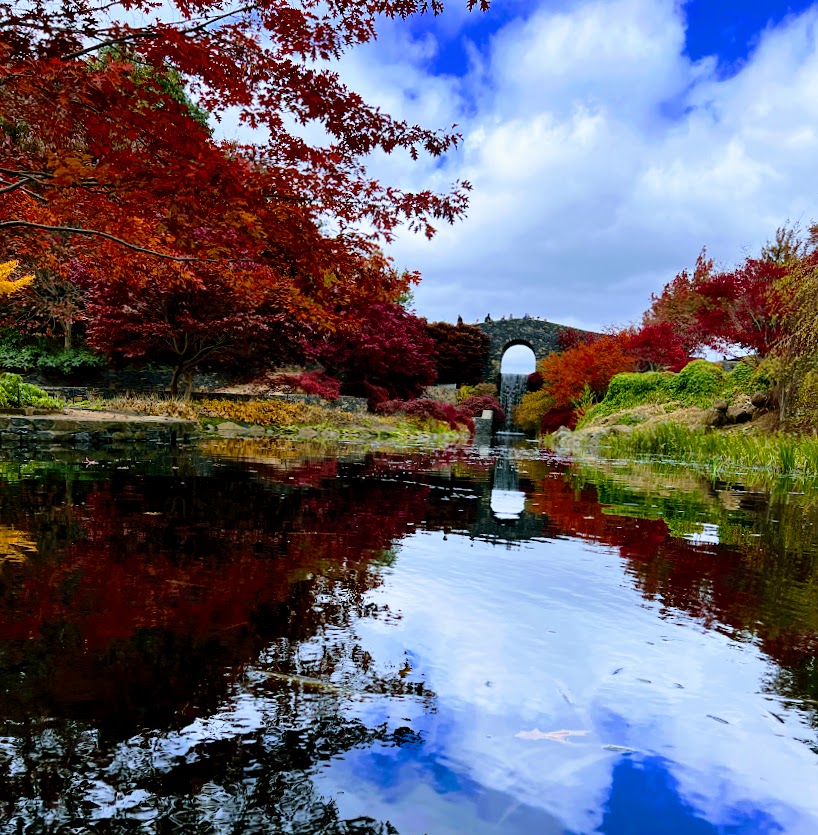
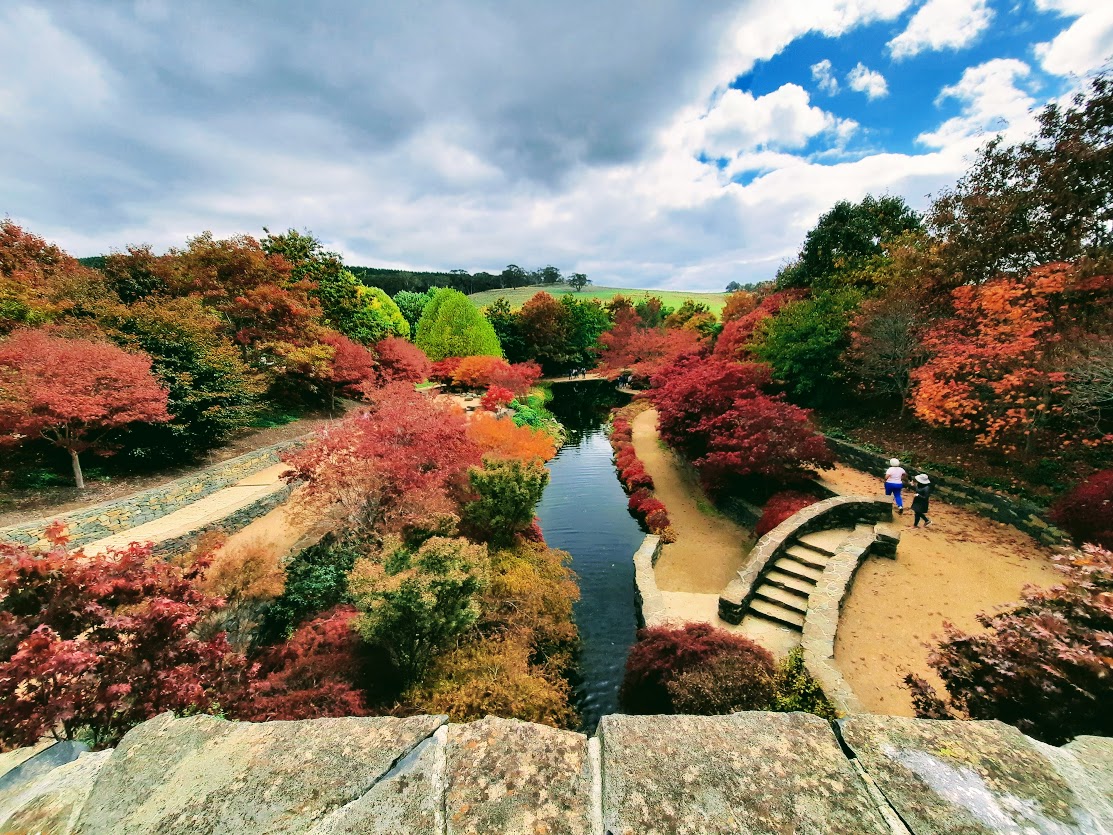
The Stone Bridge is the boundary between the Mayfield Water garden and the Hawkins’ Family Private Garden. There are wonderful views in all directions from the bridge. And how cool are the reflections?
As you gaze into the expanse of the family garden, the scale of the garden really begins to make an impact.
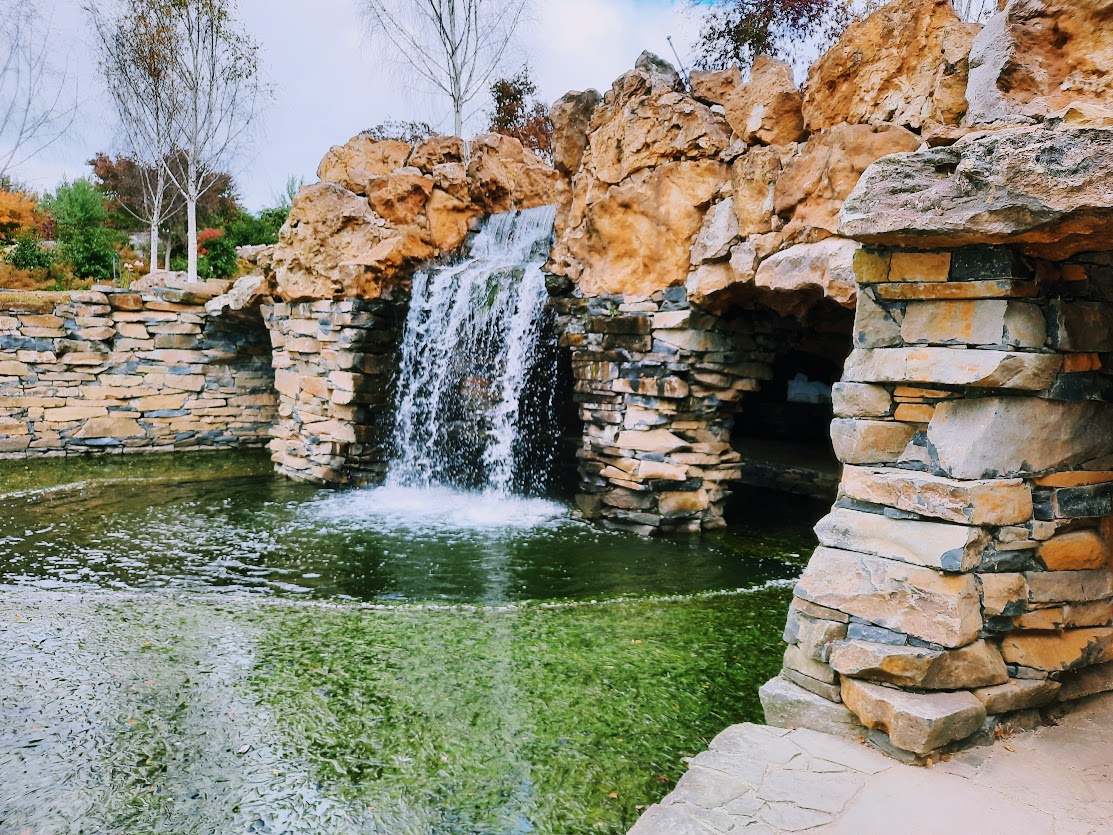
Leaving the bridge, you enter the realm of the Hawkins private garden through a grotto.
It’s cool, dark and magical.
And parts of the grotto reminded me of many of the Chinese and Japanese gardens I have visited on my travels. Blends beautifully into the Australian landscape don’t you think?
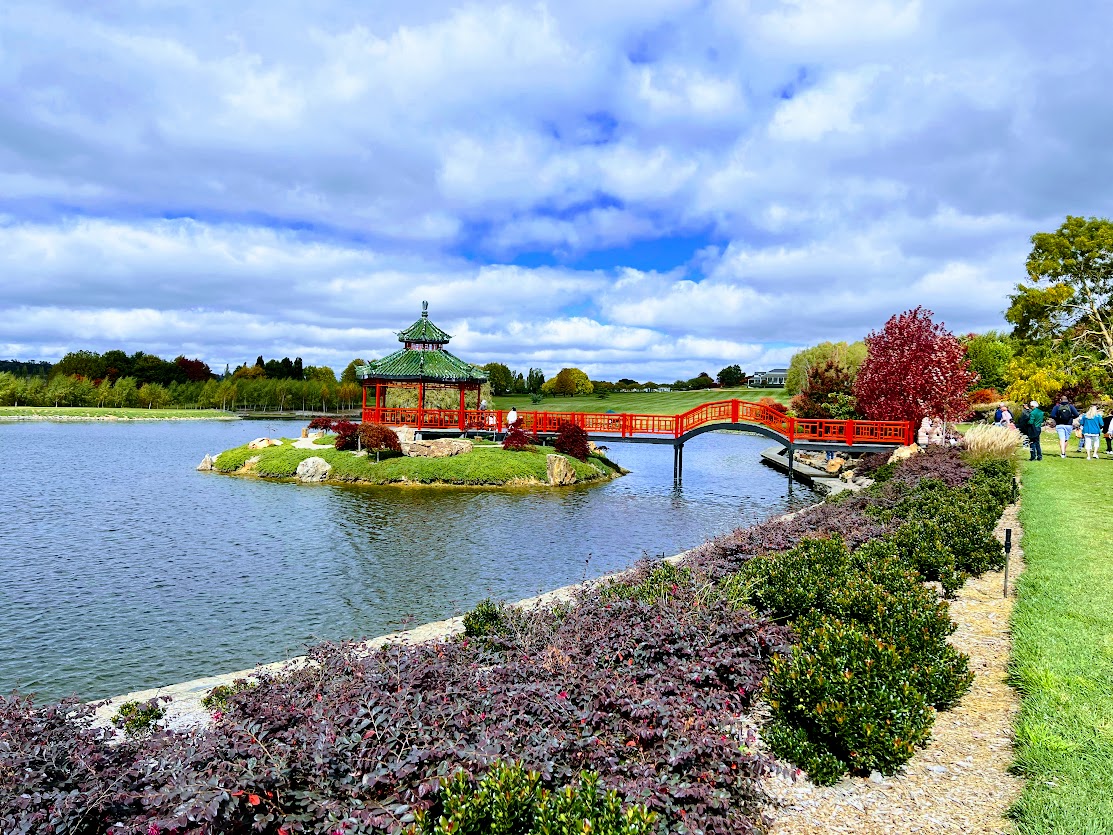
As you exit the grotto, what lies before you, but a Chinese pavilion, complete with its own personal island.
Of course, we had to visit.
We followed the lake around to the expansive lawns which led up to the main residence.

When we reached the homestead, we were delighted to see that it didn’t dominate the landscape but rather nestled into it. And how beautiful is that shrubbery at the front! By this stage of the morning, one of my other sisters, Maryanne and her husband, Kim had joined us together with their lovely dog. Yes, the gardens are pet friendly, on leash of course. One benefit of having your dog accompany you, is that suddenly, so many people want to stop to say ‘hi’, enhancing that sometimes elusive sense of connection.
The views from the homestead are incredible. Imagine waking up to this every morning!
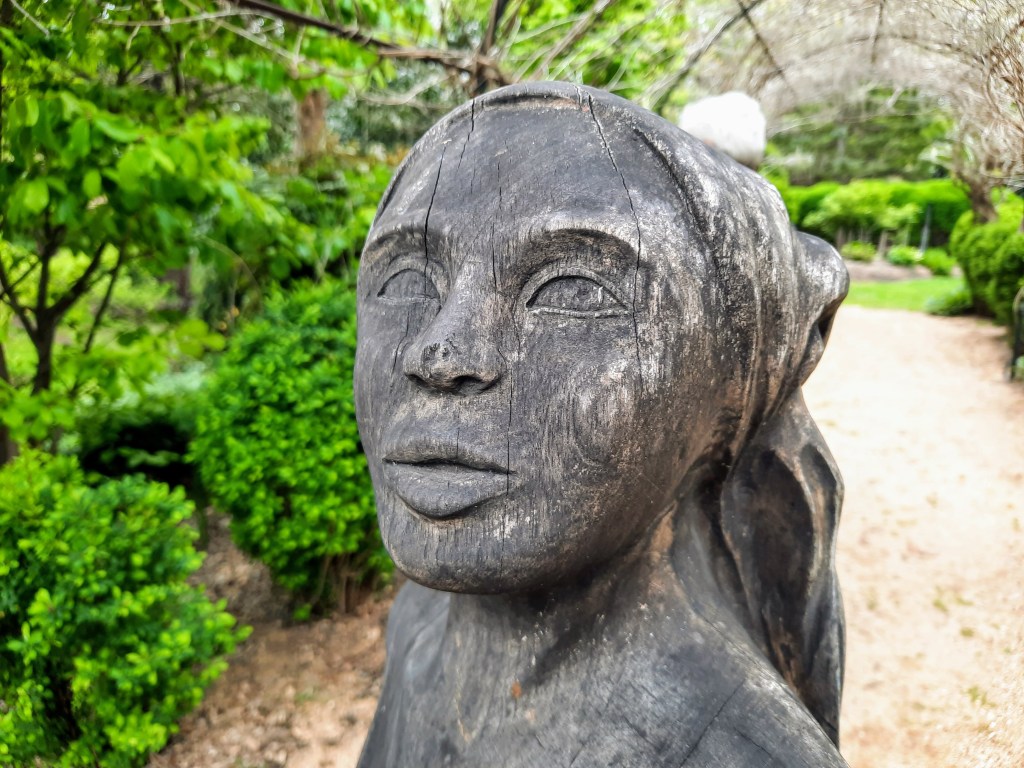
Looking across the lawn to the edge of the lake is another of the incredible sculptural pieces that dot the gardens.

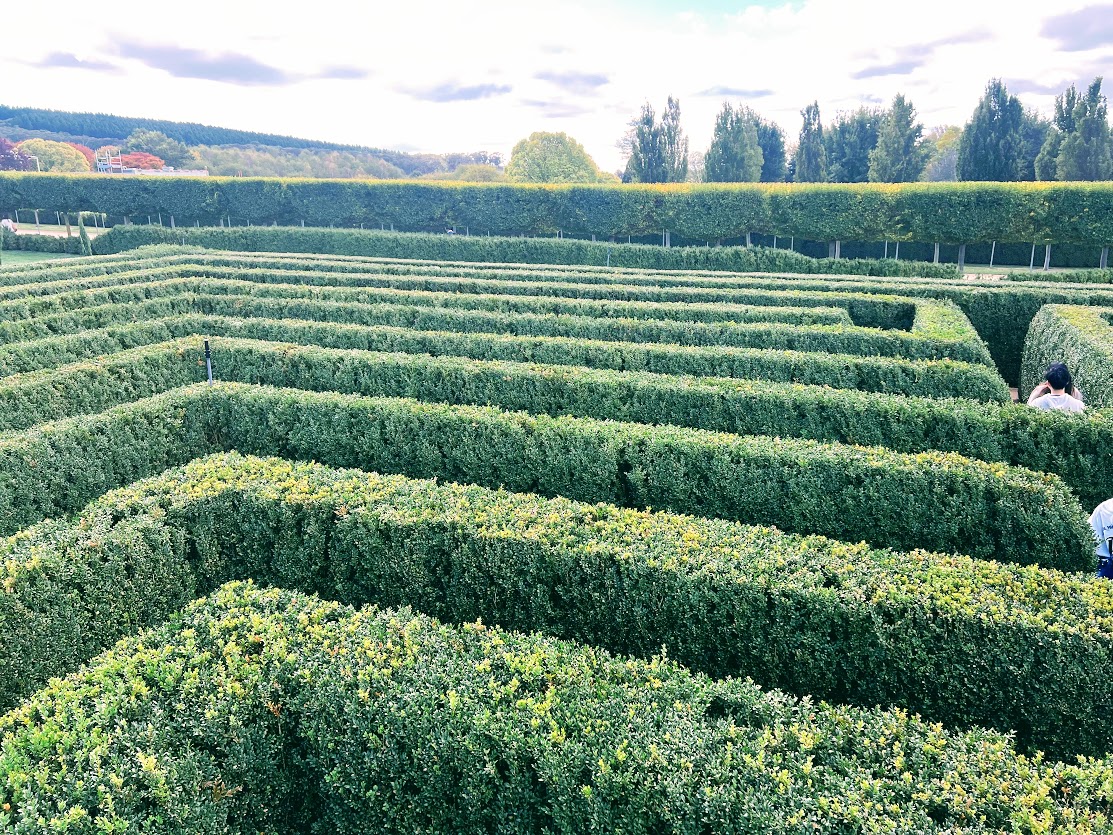
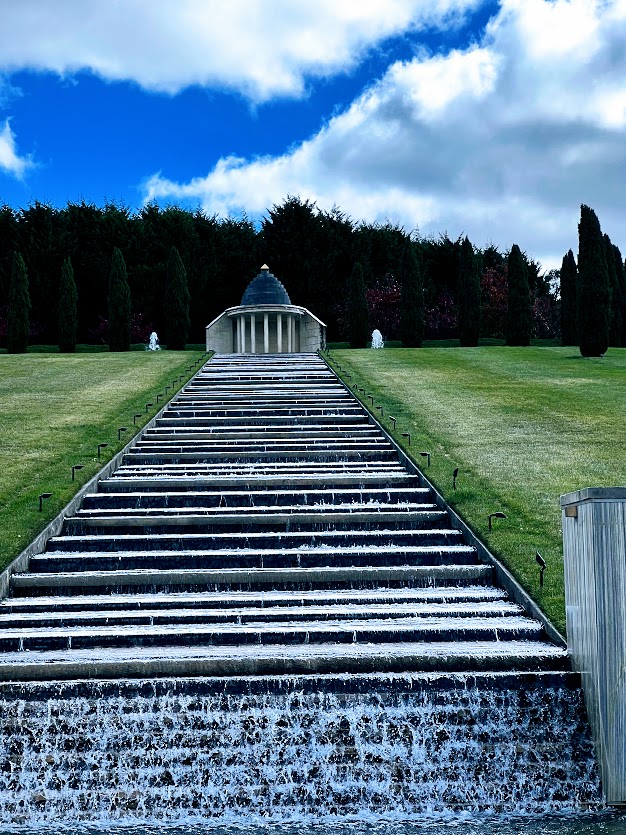
On the other side of homestead from the maze, is the water cascade complete with temple/folly. This must look particularly lovely at night.

However, we couldn’t see everything. It was quite cool, so we didn’t go Row boating on the Lake, something that would be a highlight in Summer I think. Nor did we explore the new Herbaceous Border or the Flying Fox. Alas we couldn’t visit the valley of the five ponds, the amphitheatre or the stumpery. In Spring, the Camellia Walk would be a must see but this time we didn’t linger.

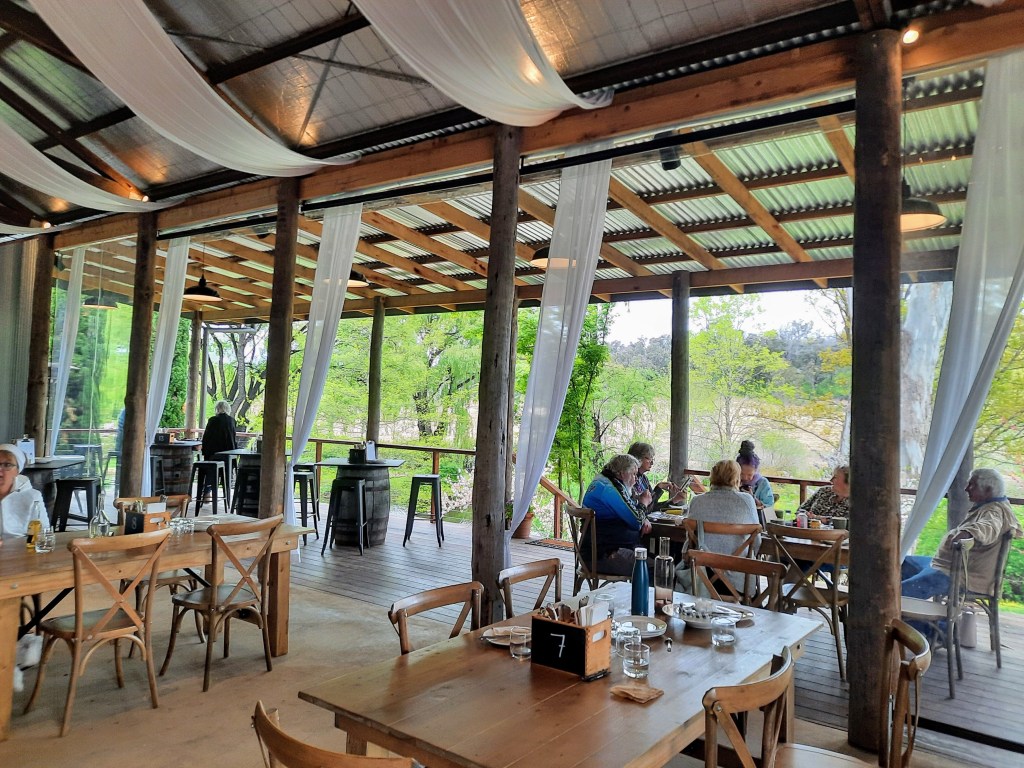
We had intended to have lunch at the cafe but didn’t realise that we had to book in advance. This would have been the icing on the cake as the cafe setting is lovely and on the day we visited, the cafe even had a fire and live music. We made do with a barbecue sandwich but will remember next time to book or bring a picnic.

All in all, we all had a wonderful time at Mayfield and can’t wait to visit again especially during festival time.
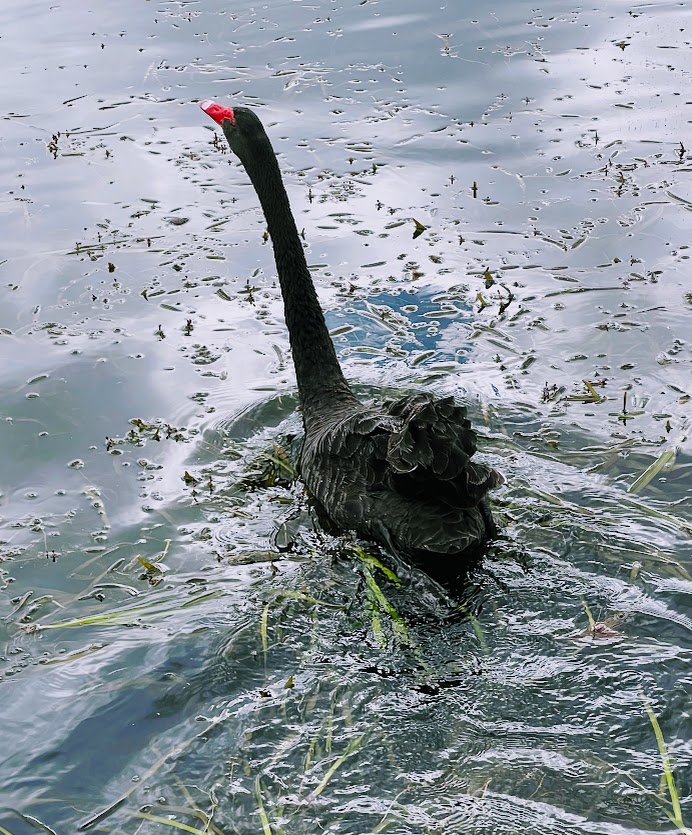
See you soon, I hope.

Tenterfield’s Glenrock Garden.

The deadline for using our NSW government Stay vouchers was fast approaching. But where could we go for just a night or two that was only a couple of hours away? Urunga or Yamba sprang to mind but sometimes, when you live near the beach, you long for something different.

‘Why not visit Glenrock Gardens ,’ my friend, Gerda suggested, as we sipped our cappuccinos, one morning back in September.

‘And where precisely are these gardens,’ I queried?

‘Near Tenterfield. They’re quite famous but they’ve been closed for a couple of years due to Covid.’

Tenterfield, I mused would fit the bill perfectly. Situated on the New England Tableland and surrounded by national parks, the town is only around three hours drive from Byron. Of course, we had been there before but not for a couple of years. So, decision made and Gerda and Richard on board, Tenterfield and the gardens awaited.

Accommodation was readily available and for the most part, very reasonably priced. We chose to redeem our vouchers at The Best Western, Sir Henry Parkes, Motel.

The rooms were very clean and quite spacious and grounds were lovely. This wisteria opposite our rooms gave us a glimpse of what was to come.

Situated on the main street, we were able to leave our cars at the motel and leisurely explore this character filled town on foot. An added bonus was The Bohemian Tearoom, which was across the road from the motel.

This cafe came highly recommended for its home baked offerings and judging by the crowd when we arrived for lunch, was very popular. We certainly enjoyed ourselves and the quirky decor.

After lunch, we sauntered through some lovely antique shops and explored Rotary Park. Tentefield’s streetscape was lovely: well maintained heritage buildings enhanced by council landscaping – on both sides of the main street, beds of red poppies and pansies greeted visitors.

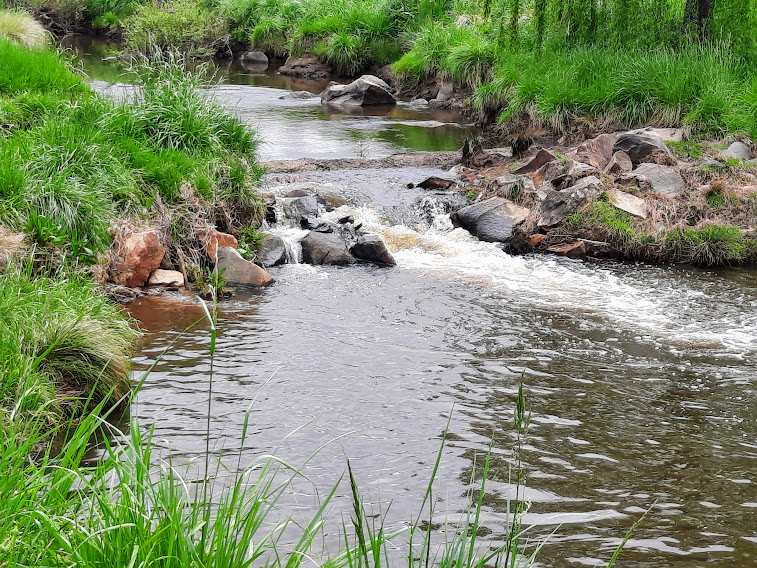
A little stream flows through the park

The evening was closing in and the Commercial Hotel was chosen for dinner. Refurbished and making the most of its art deco interior, this pub serves up market pub food. Although we didn’t book, (a mistake) they did make room (at very small table) for us. However, that was a minor inconvenience as we really enjoyed our pre-dinner drinks in front of a comforting fire happily ensconced on comfy leather sofas and the food was tasty.

The following morning was relatively fine. As the Gardens didn’t open til 10am, we had time for a visit to the Tenterfield Saddlery, made famous by the Peter Allen song. The little shop was full of interesting material from Australia’s colonial past including local links to Banjo Paterson and ‘Waltzing Matilda’.

However, the gardens awaited. They are located a few kilometres out of town and I would recommend using Google maps or something similar to make sure that you don’t inadvertently take a wrong turning. The gardens really are a green oasis in the Tablelands terrain.

The 10 acre gardens are designed around a series of small lakes or ponds which obviously provide much of the water for the garden. You can imagine our surprise when we found out that entry into the gardens are free!

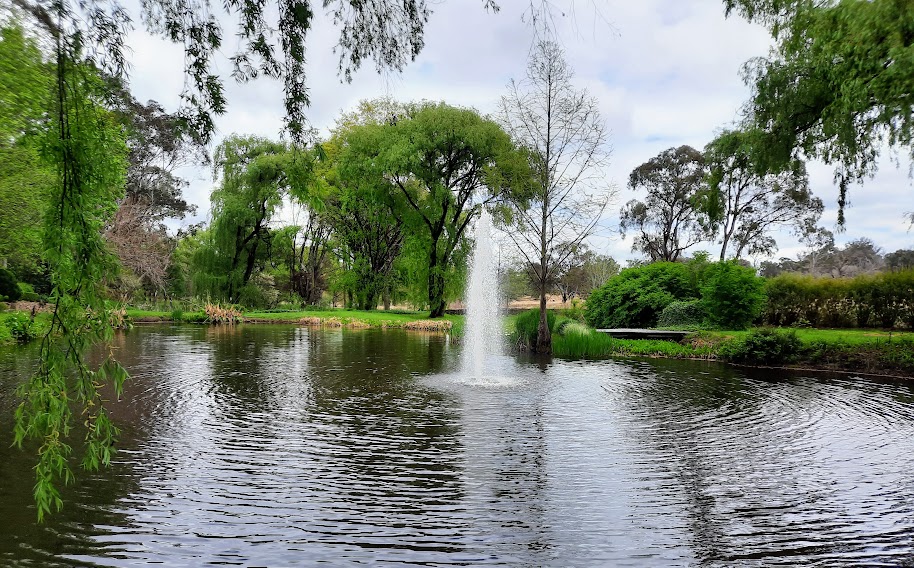
The central pond features a lovely fountain
And is still enough for lovely reflections of the trees which frame the ponds so effectively
And you can venture out onto a bridge here and there to soak up the ambiance.

From the main house and the newly opened barn, the gardens sweep down to the ponds in a series of terraces. The dry stone walls are quite stunning and each terrace leads to something new.

The colours of the stonework echo the colours of the surrounding landscape
Imagine the work in weeding all these beds!
And I loved the topiary balls.
And this statue

The garden is designed to feature different plants at different seasons. When we visited , it was blossom time.
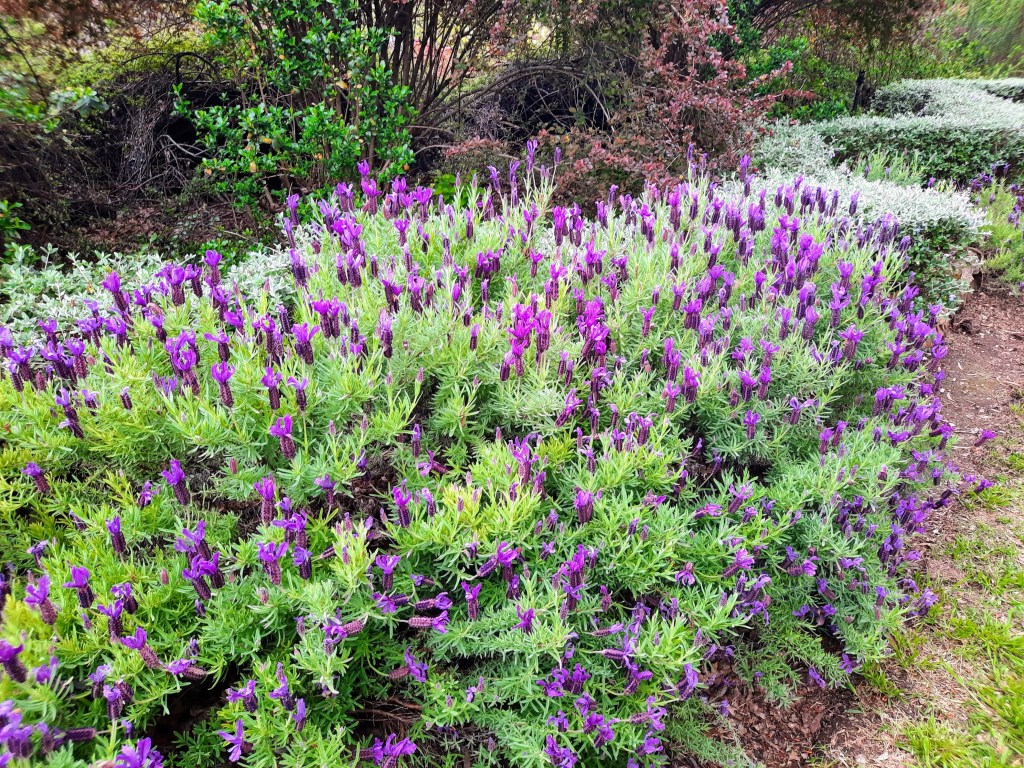


Stunning shade of pink
The bees were happy
And these balls of sunshine stood out
Just screams Spring
We were a little disappointed that the Wisteria Walk was not in bloom. We were only a week or so away judging by the buds.
But even so, like this charming nymph, we could gaze upon one of the best views of the garden.
Lovely
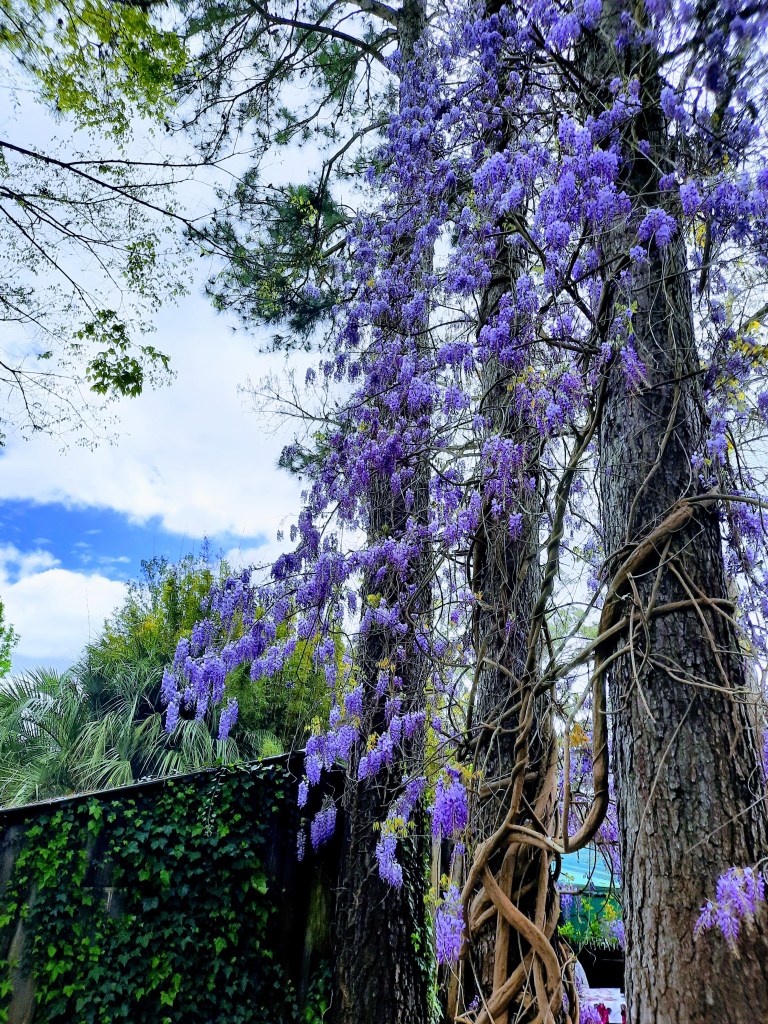
Nevertheless we were able to get our wisteria fix. When we visited the nursery, we were stunned by two tall gums covered in Wisteria, their petals carpeting the ground. I couldn’t resist buying a lovely canna from the nursery which I’m pleased to report is growing well in my garden. Hopefully, a permanent reminder of Glenrock.

There is so much to explore at the gardens. The owners have added a secret garden, a nursery and the Barn.

The food here is excellent. We wished that we had not had such a big breakfast so we could have eaten more. And such a special setting!

Amongst all the shades of green, pockets of colour gleam. More often in shades of blue and white.

And if you want, you can stay at the gardens in this cute gardener’s cottage.

Alas all good things come to an end and it was time to make our way down the mountain to Byron. On our way, we drove through Lismore which is still very much in recovery mode after the devastating floods earlier this year. Let’s hope that the current La Niña leaves us on the Northern Rivers well alone.

This beautiful feature plant was not in flower, a reminder that the following months have much to offer a visitor to Glenrock. In Arnie’s words, “we will be back.”